_edited.png)
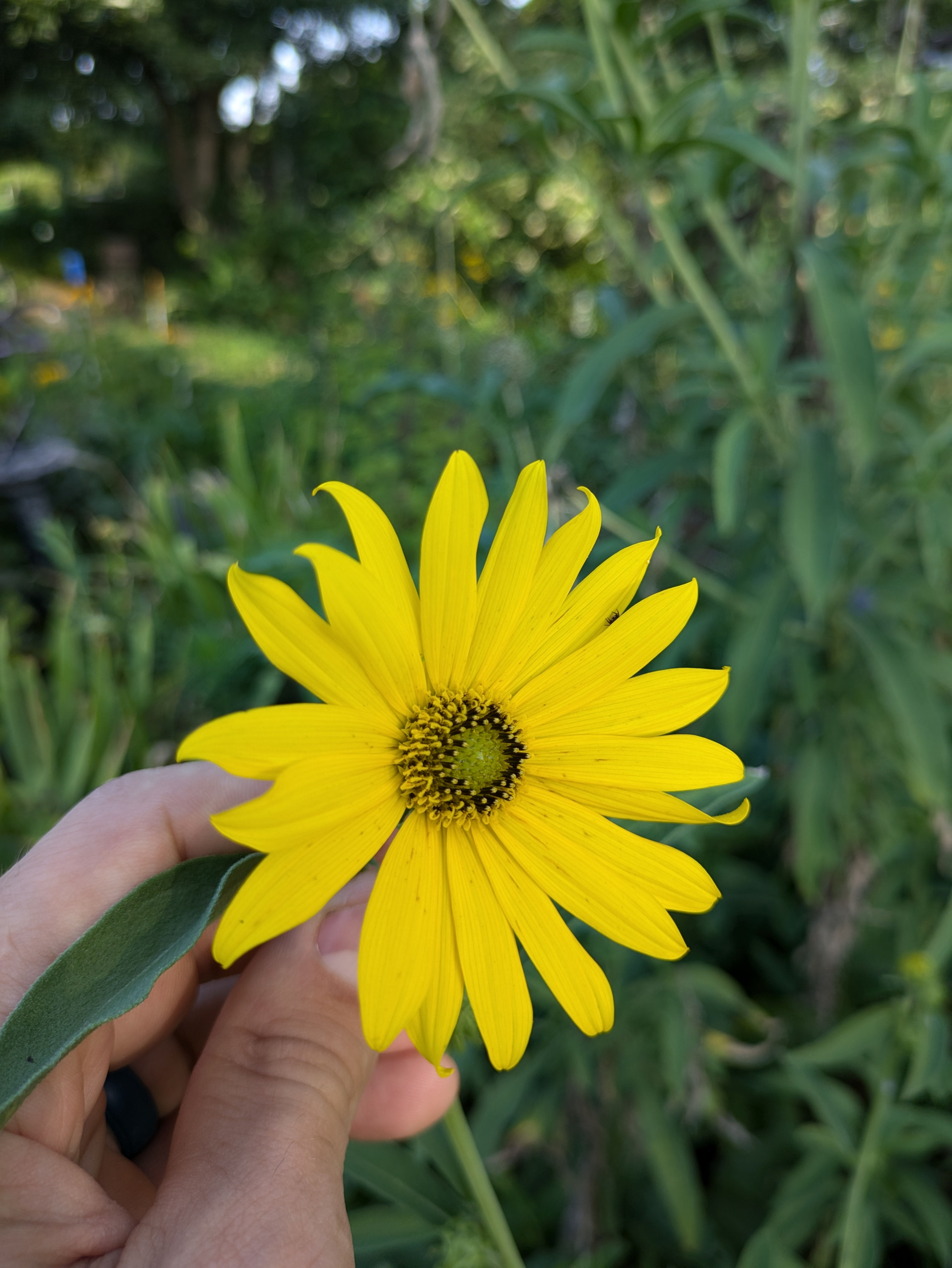

Sochan Root Divisions — Rudbeckia laciniata
Native. Edible. Hard to find.
If you know what this is, you already know why you want it.
Sochan (Rudbeckia laciniata) is a native perennial with a long history as a food plant, particularly among Cherokee communities in the eastern United States. The young spring shoots are the edible portion — harvested before the plant bolts and cooked like greens, with a mild, slightly resinous flavor.
This is not a common nursery plant. Most people looking for it have already tried to find a reliable source.
Field-Grown Root Divisions — Not Seedlings
We grow ours in southeast Kansas and propagate by division. These are established crown divisions, not seedlings. That matters: faster establishment, earlier harvest potential, higher survival in variable conditions. Each plant will return year after year from the same root system and slowly expand over time.
Where It Fits
Sochan performs best in partial to full shade with moist, rich soil. It's well-suited for woodland edges, shaded garden beds, stream banks, and naturalized plantings that mimic its native habitat. Gets 3–6 feet tall when flowering.
Kansas-Grown Advantage
Grown and divided in southeast Kansas, where heat, wind, and inconsistent rainfall quickly expose weak plants. This is material that has already handled Midwest conditions — not greenhouse-raised or shipped from mild climates.
Management Notes
Harvest young shoots in early spring before flowering. Deer will browse it but rarely kill established plants. Once established, requires little intervention.
Ships bare root in spring and fall.


